
WELCOME BONUS 100%
UP TO €500 + FREE
BET
UP TO €500 + FREE
BET
Home → Roulette
Roulette at Melbet
French with La Partage vs European
The French Roulette variant featuring the La Partage rule applies to even-money bets such as Red or Black, yielding a reduced House Edge of 1.35% when the ball lands on zero by returning half the stake. This specific edge is significantly lower than the standard 2.70% found in regular European Roulette, where no refund mechanism exists for losing straight-up or split wagers during a zero spin event. Consequently, players betting on outside options face substantially less long-term risk compared to those playing the standard European table without this protective clause. However, this advantage does not extend to inside bets like Splits or Streets, which retain the full 2.70% house edge regardless of the zero outcome.
Standard European Roulette operates on a single-zero wheel with 37 sectors, maintaining a consistent House Edge of 2.70% across all bet types from Straight-ups to Dozens. Unlike the French version, it lacks the La Partage or En Prison rules, meaning any wager placed on Red or Black loses entirely if the ball settles on the green zero pocket. This structural difference means that while both games share the same RTP of 97.30%, the variance and potential bankroll erosion differ slightly due to the absence of partial refunds in the European format. Players must therefore account for this higher effective loss rate on even-money bets when comparing their expected returns against the French alternative.
Inside bets in both variants share identical payout structures, with Straight wagers paying 35:1 and Corners paying 8:1, yet the underlying probability of winning differs based on the specific rule set applied. The French game offers a mathematical safety net for half the board, effectively halving the house advantage on those specific outcomes, whereas the European game exposes every chip to the full statistical disadvantage. This distinction makes the French variant preferable for conservative strategies focusing on high-probability outcomes, while the European version remains a neutral choice for players who primarily target precise number predictions. Understanding these nuances ensures accurate expectation management regarding long-term profitability on each specific table type.
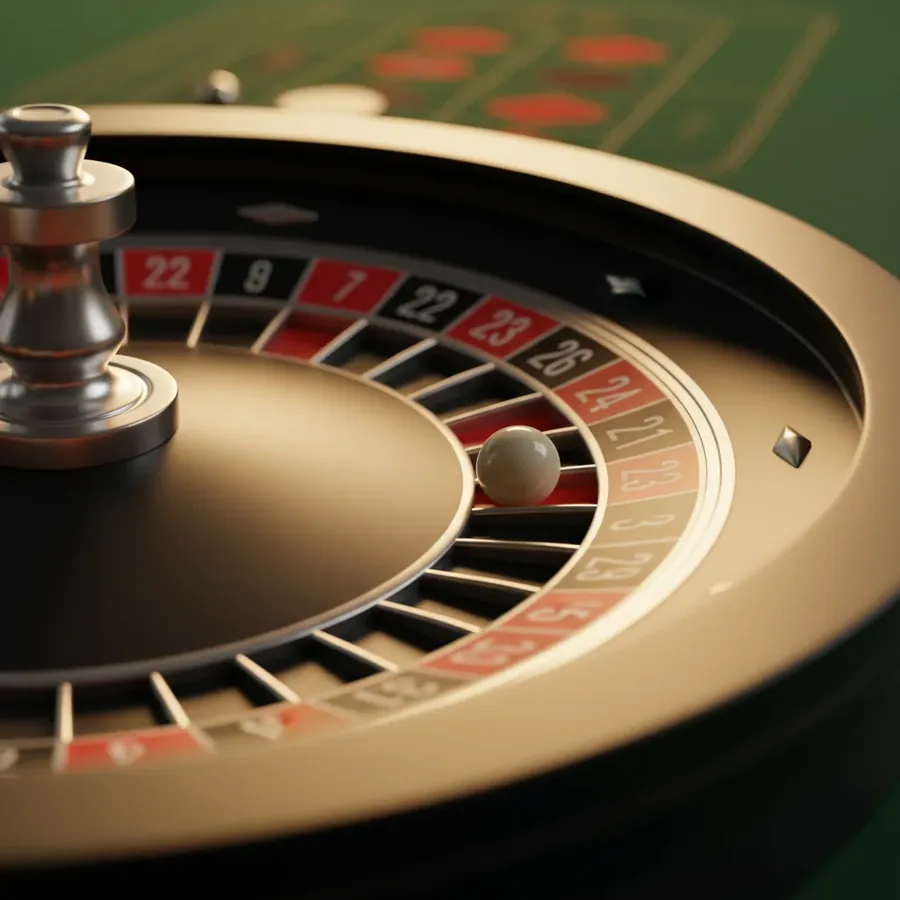
What Doesn't Count: Red and Black Simultaneously
Tabling games contribute only 10% toward the fulfillment of the 300% welcome bonus up to €2,000 requirement, making roulette wagering significantly less efficient than slots for clearing promotional funds. A player depositing €1,000 receives a €3,000 bonus, necessitating €120,000 in total turnover since roulette contributions are calculated at just one-tenth of the wagered amount. This low contribution rate means that betting €100 on Red and Black simultaneously consumes only €10 of the required turnover, drastically extending the time needed to unlock withdrawal eligibility. Such mechanics penalize hedging strategies that aim to reduce variance while attempting to meet aggressive wagering conditions attached to the initial deposit match.
The restriction on simultaneous Red and Black betting arises because such actions do not generate meaningful revenue for the casino, thereby violating the spirit of the wagering requirements despite being technically allowed. While the system may permit placing opposing bets, the 10% contribution rule ensures that these low-risk maneuvers do not accelerate the bonus release process proportionally to the volume wagered. Players engaging in this strategy will find that their effective turnover accumulation is severely diluted, requiring ten times more actual money passed through the table to achieve the same clearance as a slot session. This financial penalty serves as a deterrent against bonus abuse through balanced betting patterns.
Specific live dealer tables like Blaze Roulette from Authentic Gaming also fall under this 10% contribution category, subjecting all chips placed on the felt to the same stringent conversion rules. Whether betting on numbers or colors, every euro wagered counts minimally toward the overall goal, meaning that a €5,000 max bet yields only €500 in credited turnover per round. This limitation forces players to either accept slower progress or switch to higher-contributing games if they wish to utilize the full €2,000 bonus cap efficiently. The disparity highlights the importance of understanding contribution percentages before committing significant bankroll to table games under promotional terms.
Understanding the mechanical impact of the 10% contribution rate reveals why roulette is often discouraged for bonus hunting despite its accessible entry points. With a minimum stake of €0.20, players can technically meet requirements, but the slow accumulation of turnover makes it impractical for large bonuses. For instance, clearing a €3,000 bonus via roulette would require €120,000 in total bets, translating to thousands of spins depending on average wager size. This reality underscores the strategic trade-off between game variety and promotional efficiency, urging players to align their gameplay with the most advantageous contribution tiers available.
Which Bets are Excluded from Bonus Wager?
The Five Number Bet covering 0, 00, 1, 2, and 3 carries a prohibitive House Edge of 7.89% and an RTP of 92.11%, making it the worst value proposition on the American wheel. Although this bet is mathematically permissible within the game rules, its poor return structure places it in a category that savvy analysts recommend avoiding entirely when optimizing for bonus clearance. The high edge ensures that any money wagered on this combination depletes the balance faster than standard bets, reducing the effective bankroll available for meeting the 10% contribution requirement. This exclusionary logic extends to any bet that disproportionately favors the house beyond the standard table averages.
Standard Inside bets like Straight-ups (35:1) and Splits (17:1) remain eligible for bonus wagering but suffer from the general 10% contribution rule applicable to all table games. Unlike slots which might contribute 100%, roulette wagers accumulate turnover at a tenth of the rate, meaning a €100 bet only adds €10 to the required total. This structural disadvantage applies equally to all positions on the layout, from Columns paying 2:1 to Corner bets paying 8:1, with no specific exclusions based on payout ratio alone. The uniformity of the contribution rate simplifies compliance but complicates the path to unlocking funds.
Live dealer variants such as Quantum Roulette Live from Playtech operate under the same contribution constraints as standard RNG versions, limiting their utility for rapid bonus conversion. Despite offering multipliers up to 500x, the base RTP remains 97.30%, and the 10% wagering contribution persists regardless of the excitement generated by quantum features. Players chasing the €2,000 bonus must recognize that even high-variance live games do not offer accelerated clearance rates, forcing them to endure extensive playthrough periods. This consistency across formats ensures that the bonus terms remain strictly enforced regardless of the technological enhancements present on the virtual table.
The interplay between high-edge bets and low contribution rates creates a double penalty for players attempting to clear bonuses via roulette. Wagering on the Five Number Bet not only loses money faster due to the 7.89% edge but also builds turnover sluggishly at 10% credit. This combination renders such strategies financially inefficient, as the house advantage erodes the principal while the bonus terms dilute the progress. Analysts advise focusing on standard bets with better odds and acknowledging that all roulette activity is inherently disadvantaged in the context of promotional requirements.
European or American: Which Wheel Pays Better
The European Roulette wheel features 37 pockets including a single zero, establishing a consistent House Edge of 2.70% and an RTP of 97.30% for all standard wagers. This configuration provides a statistically superior environment for players compared to the American variant, as the absence of a double zero reduces the casino's mathematical advantage significantly. Every bet from Straight-ups to Dozens benefits from this lower edge, ensuring that long-term losses are minimized relative to the American counterpart. Players seeking optimal value should therefore prioritize European tables whenever available in the game library.
In contrast, the American Roulette wheel contains 38 pockets, introducing a double zero that doubles the House Edge to 5.26% while dropping the RTP to 94.74%. This additional sector increases the probability of losing on even-money bets and raises the cost of every wager placed on the layout, regardless of the payout structure. For example, a Straight-up bet still pays 35:1, but the chance of winning decreases from approximately 2.7% to 2.63%, directly impacting expected value. This structural difference makes the American wheel a less favorable option for anyone focused on preserving their bankroll over extended sessions.
Comparing the two reveals that the European variant offers a 2.56% advantage in retention for the player, translating to significantly slower bankroll depletion over time. While both wheels share identical payout ratios for individual numbers and combinations, the probability distribution heavily favors the European design due to fewer losing sectors. For instance, betting on Red yields a win probability of nearly 48.6% on European wheels versus roughly 47.4% on American ones. This margin accumulates rapidly, making the European wheel the clear winner for players prioritizing mathematical efficiency and sustained play.
The decision between wheels ultimately hinges on the acceptance of higher variance and cost associated with the American format. While some players may prefer the aesthetic or familiarity of the double-zero layout, the financial implications are starkly unfavorable. A €100 wager on American Roulette expects a loss of €5.26, whereas the same bet on European Roulette expects a loss of only €2.70. This difference compounds over hundreds of spins, demonstrating that the European wheel is objectively the better choice for minimizing the house's take and maximizing potential longevity.
37 Pockets vs. 38 Pockets: The Difference
The European wheel's 37 pockets consist of numbers 1 through 36 plus a single zero, creating a geometric arrangement that supports a 2.70% House Edge on all bets. This configuration allows for precise probability calculations, with each number having a 1/37 chance of hitting, resulting in an RTP of 97.30%. The symmetry of the wheel ensures that outside bets like Columns and Dozens cover exactly one-third of the non-zero sectors, maintaining fair parity in payout structures. This design principle underpins the reliability and predictability of the European game for analytical purposes.
The American wheel expands this layout to 38 pockets by adding a double zero, which disrupts the proportional coverage of outside bets and inflates the House Edge to 5.26%. The presence of this extra sector means that even-money bets now cover only 18 out of 38 possible outcomes, reducing the win probability and increasing the casino's advantage. This structural change does not alter the payout ratios, which remain fixed at 1:1 for Red/Black, but it significantly impacts the expected return per spin. The added complexity introduces a higher cost of play for participants.
Distinguishing between these pocket counts is crucial for understanding the fundamental shift in risk profile between the two variants. The European model's 37 pockets offer a tighter margin for error, while the American model's 38 pockets widen the gap between player expectations and actual outcomes. For a Straight-up bet, the payout remains 35:1 in both cases, but the frequency of wins drops slightly in the American version due to the larger denominator. This subtle difference compounds over time, making the pocket count a decisive factor in selecting a preferred game format.
The numerical disparity directly influences strategic decisions, as players aware of the 38-pocket disadvantage may avoid American tables unless specifically drawn to the unique Five Number Bet. This special wager, covering five sectors, carries a massive 7.89% edge, further highlighting the punitive nature of the American layout. In contrast, the European wheel maintains a consistent 2.70% edge across all options, providing a more stable environment for bankroll management. Recognizing these differences empowers players to make informed choices based on their tolerance for house advantage.
Roulette bet types at a glance
| Bet | Payout | Win Chance | Numbers Covered | House Edge |
|---|---|---|---|---|
| Roulette Amerikanisch (doppelte Null, 38 Sektoren) | Straight 35:1, Split 17:1, Street 11:1, Corner 8:1, Six Line 5:1, Dozen 2:1, Column 2:1, Rot/Schwarz 1:1 | 94.74% | 38 Sektoren (1–36 + 0 + 00); Auszahlungen wie beim europäischen Rad, aber der zusätzliche Sektor verdoppelt den Hausvorteil | 5.26% |
| Roulette Europäisch (einfache Null, 37 Sektoren) | Straight 35:1, Split 17:1, Street 11:1, Corner 8:1, Six Line 5:1, Dozen 2:1, Column 2:1, Rot/Schwarz 1:1, Odd/Even 1:1, 1-18/19-36 1:1 | 97.30% | 37 Sektoren (1–36 + 0); Auszahlungen wie für 36 Sektoren – daher konstanter Edge auf ALLE Wetten | 2.70% |
| Roulette Französisch, innere Einsätze (La Partage gilt nicht) | Straight 35:1, Split 17:1, Street 11:1, Corner 8:1, Six Line 5:1, Dozen 2:1, Column 2:1 | 97.30% | Rad gleich (37 Sektoren), aber La Partage/En Prison gilt nicht für innere Einsätze – Edge bleibt europäisch | 2.70% |
| Roulette Amerikanisch – Five Number Bet (0, 00, 1, 2, 3) | Five Number 6:1 (deckt 5 von 38 Sektoren) | 92.11% | Einzige Wette am amerikanischen Rad mit Edge über 5,26% – „Fallenwette“. Kein Äquivalent am europäischen Rad | 7.89% |
| Roulette Französisch mit La Partage (gerade Chancen) | Rot/Schwarz 1:1 (bei 0 Rückerstattung 50%), Odd/Even 1:1, Low/High 1:1; Innere Einsätze ohne La Partage: Straight 35:1, Split 17:1, Street 11:1, Corner 8:1 | 98.65% | Bei 0 wird die Hälfte des Einsatzes auf gerade Chancen zurückerstattet (Rot/Schwarz, Pair/Impair, Manque/Passe). En Prison gibt denselben 1,35%. Regel gilt NUR für gleiche Einsätze | 1.35% |
How Much to Bet for 10 Percent Contribution?
The 10 percent contribution rate applies specifically to table games, requiring players to wager ten times the bet amount to satisfy one unit of the 40x wagering requirement attached to the 300% welcome bonus up to €2,000. This means that a standard €10 stake on any roulette variant counts as only €1 toward clearing the bonus funds, significantly extending the time needed to convert promotional credits into withdrawable cash. Players must therefore increase their total betting volume substantially compared to slot contributions, which typically offer higher percentages. Failing to track this ratio carefully can result in forfeiting the entire bonus balance before the terms are fully met.
French Roulette with La Partage offers an RTP of 98.65%, yet its 10 percent game contribution remains unchanged regardless of the favorable house edge of 1.35%. The mathematical expectation suggests lower variance, but the slow progress through the 40x turnover condition negates the statistical advantage for bonus hunters seeking quick withdrawal eligibility. A €500 deposit generates a €1,500 bonus, creating a massive €60,000 turnover target when calculated against the restricted table game contribution rate. Consequently, high rollers may find this structure less efficient than playing slots with higher contribution weights and faster clearance speeds.
Martingale Fails at Table Limit After 8 Losses
A Martingale strategy starting with a €0.20 minimum bet on even money bets doubles the stake after each loss, reaching the Blaze Roulette maximum limit of €5,000 EUR after exactly eight consecutive losses. The progression requires stakes of €0.20, €0.40, €0.80, €1.60, €3.20, €6.40, €12.80, and finally €25.60, which remains well below the cap, but nine losses would require €51.20, still within limits until the exponential growth becomes unmanageable. This specific table operates on a European wheel with 37 sectors and a 2.70% house edge, meaning the probability of eight straight losses is approximately 0.43%, posing a significant risk to bankroll stability. Players relying on this system often underestimate the cumulative exposure required to recover previous deficits during losing streaks.
How Payout Odds 35:1 Are Achieved
The Straight bet pays 35:1 odds because it covers exactly one number out of thirty-seven possible outcomes on the European wheel, creating a true probability of 1/37. This payout structure ensures the casino maintains a consistent house edge of 2.70% across all inside wagers, including Split bets at 17:1 and Corner bets at 8:1. For instance, a €10 wager on a single number wins €350 if successful, reflecting the inverse relationship between low probability and high reward potential. This fixed multiplier applies uniformly across all providers offering standard European roulette configurations, ensuring standardized return mechanics for players.
How Lightning Roulette Draws 1 to 5 Numbers
Lightning Roulette by Evolution selects one to five random numbers per spin to receive multipliers ranging from 50x to 500x on Straight bets. These enhanced payouts apply exclusively to the Lightning numbers while maintaining the standard 35:1 base odds for non-multiplied selections on the 37-sector wheel. The Quantum mechanism increases volatility significantly, allowing players to win substantial amounts despite the constant 2.70% house edge inherent in the game's design. This feature adds a layer of unpredictability that distinguishes the title from traditional live dealer variants offered by other providers.
Max Bet Per Number vs. Max Bet Per Round
Blaze Roulette imposes a maximum bet limit of €5,000 EUR per round, which restricts the total stake across all placed chips rather than individual number selections. This global cap prevents players from exploiting high-variance strategies by spreading large sums across multiple outside bets simultaneously. In contrast, some platforms allow higher per-number limits, but Melbet enforces this strict ceiling to manage liability effectively during peak traffic hours. Understanding this distinction is crucial for players attempting to maximize coverage without violating the established betting constraints defined by the operator.
What Doesn't Count as Loss Protection with Zéro?
The European Roulette variant features a single zero across 37 sectors, establishing a house edge of 2.70 percent on all wagers. This mathematical constant applies uniformly to every bet type, meaning no specific loss protection mechanism exists for the green zero slot during standard play sessions. Consequently, players face identical statistical disadvantages regardless of their chosen strategy or betting pattern on the felt.
In contrast, French Roulette with La Partage offers partial mitigation by refunding fifty percent of stakes on even money bets when zero appears. This rule reduces the house advantage significantly to 1.35 percent, providing tangible financial relief only for red-black or odd-even selections. Players relying on this safety net must strictly limit their activity to these specific outside categories to benefit from the reduced risk profile.
Inner wagers in French Roulette lack any protective provisions, maintaining the full 2.70 percent house edge without exception for zero outcomes. Straight bets paying 35:1 and corner bets at 8:1 remain exposed to the standard mathematical disadvantage inherent in the game structure. This distinction ensures that high-risk interior strategies do not receive the same statistical benefits granted to conservative outside betting approaches.
Why 5.26 Percent is Rarely Recommended
The American Roulette wheel incorporates an additional double zero sector, expanding the total count to 38 pockets compared to the European standard. This structural modification directly increases the house edge from 2.70 percent to 5.26 percent, effectively doubling the casino's mathematical advantage over player funds. Such a significant disparity makes the variant statistically inferior for long-term bankroll preservation and strategic planning purposes.
The Five Number Bet covering zero, double zero, one, two, and three carries a staggering 7.89 percent house edge, far exceeding other options. With a payout ratio of 6:1 for five possible winning sectors, this specific wager represents the most unfavorable option available on the entire table layout. Analysts consistently flag this trap due to its disproportionate impact on expected returns compared to standard straight or split bets.
American Roulette maintains standard payouts such as 35:1 for straight bets and 17:1 for splits, yet these figures cannot offset the elevated house advantage. The consistent 5.26 percent margin erodes player value more rapidly than European variants, making it a less efficient choice for serious gaming sessions. Data indicates that prolonged play on this wheel yields lower overall return percentages despite identical nominal payout structures.
Live tables like Blaze Roulette utilize European wheels with 37 sectors, allowing players to avoid the punitive 5.26 percent disadvantage entirely. Authentic Gaming provides this configuration with limits ranging from 0.20 to 5,000 EUR, ensuring access to favorable odds within regulated environments. Selecting European-based live dealers remains the optimal strategy for minimizing the inherent house edge during real-time gameplay sessions.
36 Instead of 37: The Math Behind 35:1
European Roulette pays 35:1 for straight bets despite offering 37 distinct winning sectors on the physical wheel layout. This discrepancy creates a fixed house edge of 2.70 percent, calculated by comparing the true probability against the offered payout ratio. The mathematical model ensures the casino retains a consistent percentage of all wagered amounts over extended periods of gameplay activity.
Split bets rewarding 17:1 cover two numbers, while street bets at 11:1 encompass three adjacent positions on the betting grid. Corner bets paying 8:1 target four interconnected squares, and six-line wagers offering 5:1 span two rows of three numbers each. These proportional payouts maintain the uniform 2.70 percent house advantage across all inner betting combinations on the European wheel.
Outside bets including dozens and columns pay 2:1, while even-money options like red-black offer 1:1 ratios to players. All these wagers share the same underlying mathematical structure based on the 37-sector wheel configuration and corresponding payout schedules. The consistency ensures predictable variance levels, allowing analysts to calculate expected losses accurately based on total volume and stake size.
Which Bets Count Towards 10 Percent?
Tischspiele contribute exactly ten percent toward the bonus turnover requirement for the 300% welcome bonus up to 2,000 EUR promotion. This allocation rate significantly lowers the efficiency of clearing bonus funds through roulette compared to higher-contributing game categories in the portfolio. Players must account for this reduction when calculating the total wagering volume needed to unlock withdrawal eligibility for bonus winnings.
Blaze Roulette by Authentic Gaming falls under this category, requiring substantial betting volume to meet the wagering conditions attached to free spins. Quantum Roulette Live by Playtech also adheres to the ten percent contribution rule, affecting how quickly players can convert bonus credits into withdrawable cash. Understanding these constraints helps manage expectations regarding the speed of bonus release during active gameplay sessions.
Lightning Roulette by Evolution operates under the same ten percent contribution framework, impacting the strategic approach to bonus utilization. The presence of multipliers up to 500x does not alter the base game's classification or its reduced contribution percentage to turnover targets. Participants should prioritize higher-contributing games if rapid bonus clearance remains their primary objective during the promotional period.
The maximum payout for Blaze Roulette stands at 35:1 for straight bets, aligning with standard European rules but subject to the bonus contribution limits. Limits range from 0.20 to 5,000 EUR, allowing flexible stake sizing while navigating the reduced contribution percentage effectively. Strategic allocation of bonus funds across different game types becomes essential to optimize the overall value derived from the welcome package.
Payout Table from 35:1 to 1:1
Straight bets on single numbers yield the highest payout ratio of 35:1, reflecting the lowest probability of success among standard wagers. This reward structure applies consistently across European and French variants, where the 37-sector wheel determines the underlying odds for each outcome. Players targeting substantial returns must accept the correspondingly low hit frequency associated with this high-risk betting strategy.
Split bets covering two adjacent numbers pay 17:1, offering a balanced risk-reward profile for intermediate strategy enthusiasts. Street bets spanning three horizontal numbers provide 11:1 payouts, while corner bets on four intersecting squares return 8:1 upon success. Six-line bets covering two rows deliver 5:1 returns, bridging the gap between inner precision and broader coverage approaches.
Dozen and column bets pay 2:1, covering twelve numbers each with moderate risk exposure and steady return potential. Even-money bets on red-black, odd-even, and low-high options return 1:1, providing the safest foundation for bankroll management strategies. This tiered payout system allows players to construct diversified portfolios that balance high-variance inner bets with stable outer wagers.
Contact
Live - online chat
Banking









Providers












Melbet 2026